
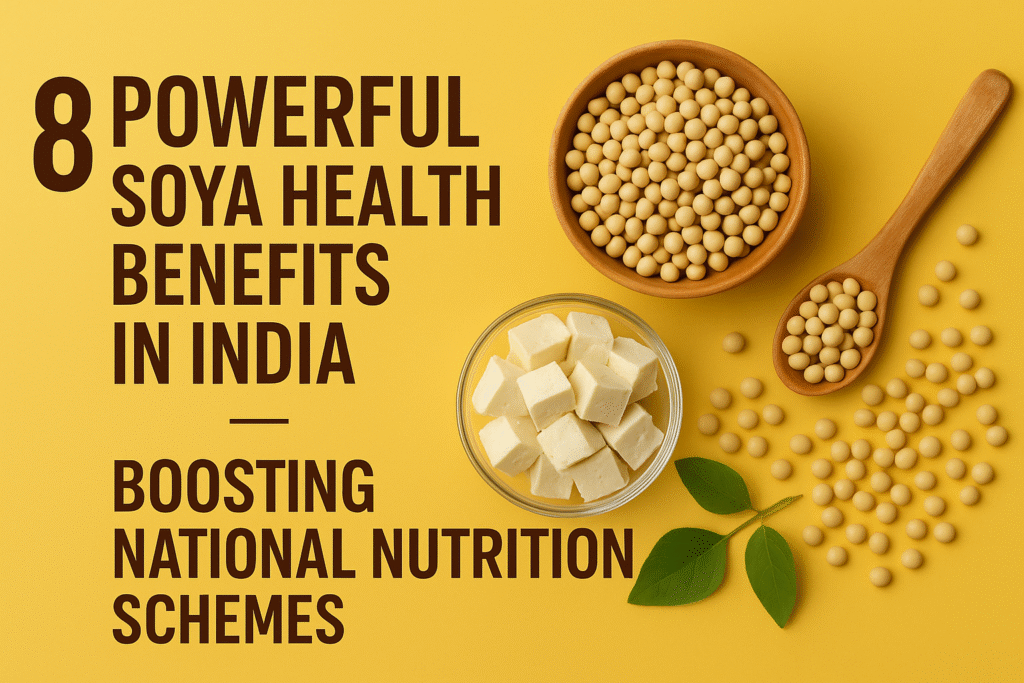
Learn about soya health Benefits in India, supported by Science and Ayurveda, and see how soy can power better Nutrition for Women, Children, and Families.
India faces one of the world’s largest nutrition challenges — undernutrition and hidden hunger still affect millions, especially in rural areas, among women, and children. Discover the science-backed soya health benefits in India. Learn how soy strengthens nutrition schemes, reduces anaemia, and supports a healthier nation.
Despite rapid growth and food production, the 2023 NFHS-5 (National Family Health Survey) shows that more than one-third of Indian children are stunted and over 50% of women are anaemic.
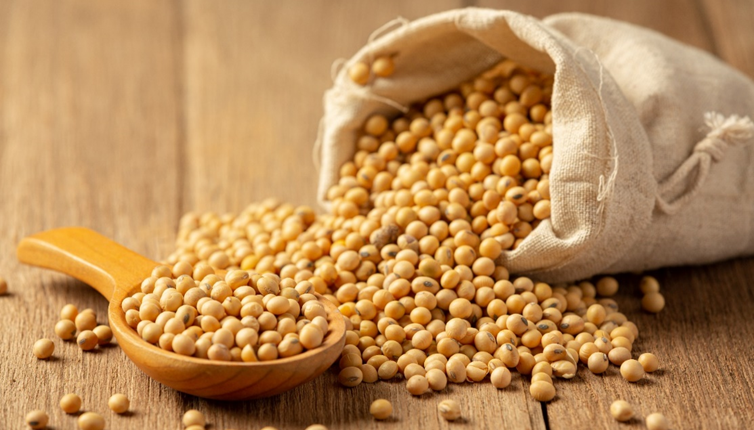
Soya Health Benefits in India – a Protein-rich Superfood for National Nutrition Programs
Lack of affordable, high-quality protein remains one of India’s biggest nutritional challenges. This is where soya (soybean), India’s very own “golden bean”, can be a game changer.
In this post, you’ll discover soya health benefits in India, backed by data-driven evidence, government insights, and practical steps showing how soy can power India’s nutrition missions like Poshan Abhiyaan, Mid-Day Meal, and ICDS. You’ll also learn simple ways every Indian household can include soy in their daily diet for better health and balanced nutrition.
What the Data & Research Say About Soya Health Benefits in India
1. India’s Nutrition Problem in Numbers
- Protein deficiency: 7 out of 10 Indians don’t get enough protein daily (ICMR-NIN, 2023).
- Anaemia: 57% of Indian women (15–49 years) are anaemic (NFHS-5).
- Children’s malnutrition: 35% are stunted, 19% are wasted.
- Economic cost: Malnutrition costs India over ₹2.7 lakh crore annually (World Bank, 2022).
Why Soy Fits India’s Nutrition Schemes Perfectly
| Feature | Why It Matters for India |
| High protein (40%) | Solves India’s “Protein Gap” affordably |
| Rich in iron, calcium, B vitamins | Tackles anaemia & bone weakness |
| Low cost (₹100–150/kg) | Accessible for government & families |
| Locally grown | Reduces import dependency |
| Shelf-stable products | Ideal for Anganwadi’s & schools |
| Vegan & versatile | Fits all cultural diets |
Fact: India is the 5th largest soybean producer, mainly in Madhya Pradesh and Maharashtra yet most soy is used for oil, not human nutrition.
Transforming this could revolutionize public health and rural employment simultaneously.
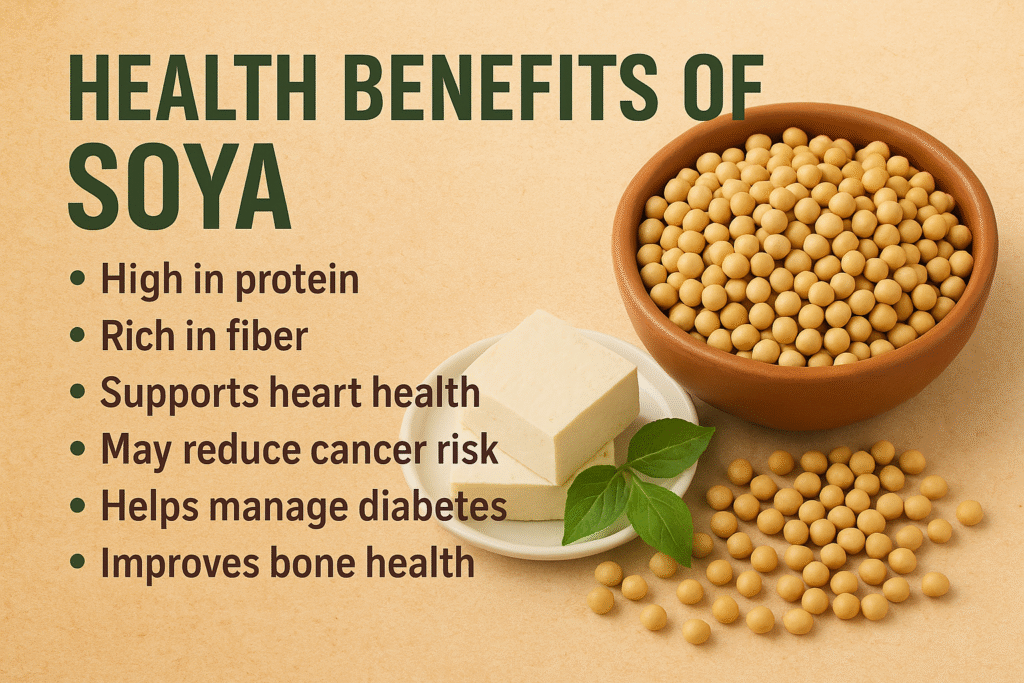
3. Soya Health Benefits in India: Backed by Science and Research
- A 2022 study by NIN Hyderabad found that adding soya flour to mid-day meal rotis improved protein and iron intake by 25% in school children.
- In Maharashtra’s ICDS pilot (2021), fortified soy khichdi reduced malnutrition in tribal toddlers by 18% in 6 months.
- AIIMS Delhi (2020) observed that substituting 30% of wheat with soy flour in chapatis increased protein digestibility and satiety.
Takeaway: Soy is not a luxury food; it’s a Strategic Nutrition Weapon.
Health Benefits of Soya (Backed by Science)
Soya is one of nature’s most nutrient-dense foods. Let’s break down how it helps body systems relevant to both urban wellness and rural malnutrition.
1. High-Quality Plant Protein
- Contains all 9 essential amino acids, making it a complete protein.
- Easily digestible and ideal for vegetarians & vegans.
- Builds muscle, repairs tissues, supports growth in children.
ICMR data:
100 g of soy chunks = 52 g protein,
compared to 100 g paneer = 18 g protein.
2. Improves Heart Health
- Lowers LDL (“bad”) cholesterol and increases HDL (“good”) cholesterol.
- Isoflavones in soy improve blood vessel flexibility.
- AHA 2022 review: Soy intake reduces cardiovascular risk by 4–6%.
3. Supports Weight Management
- High protein + fiber = long-lasting fullness.
- Reduces sugar cravings and overeating.
- Ideal for weight loss and diabetic diets.
4. Strengthens Bones
- Rich in calcium, magnesium, and phytoestrogens.
- Prevents osteoporosis in postmenopausal women.
5. Boosts Brain and Hormone Health
- Isoflavones act as antioxidants, supporting brain function.
- Helps maintain hormonal balance in women without side effects.
6. Safe and Beneficial for Men
- No scientific evidence links soy to “feminizing” effects.
- Improves muscle recovery and metabolism.
7. Prevents Lifestyle Diseases
- Helps manage diabetes, hypertension, and obesity.
- Low glycemic index (GI) = stable blood sugar.
8. Environmentally Sustainable
- Soy needs less water and fertilizer than meat or dairy.
- Encourages climate-friendly nutrition.
Ayurveda, Tradition & Indian Wisdom
While soy itself came to India through modern agriculture, Ayurveda’s principles of balanced, plant-based nutrition align perfectly with soy’s role.
Ayurvedic Viewpoint
In Ayurvedic terms, soy is:
- Balya (strength-giving)
- Snigdha (nourishing)
- Guru (heavy, requires proper digestion)
Hence, Ayurveda suggests:
- Always cook soy well to reduce heaviness.
- Combine with spices like cumin, turmeric, or hing to aid digestion.
- Prefer fermented soy (tempeh, miso) if digestion is weak.
Soya Health Benefits in India and Their Traditional Indian Integration
You can already see soy in Indian kitchens:
- Soy flour in chapatis, pooris, or laddoos.
- Soy chunks in pulao or curry for vegetarian protein.
- Soy milk with turmeric for immunity (modern “haldi doodh” upgrade).
How Soya Can Power India’s Nutrition Missions ends beautifully with our Indian cooking heritage.
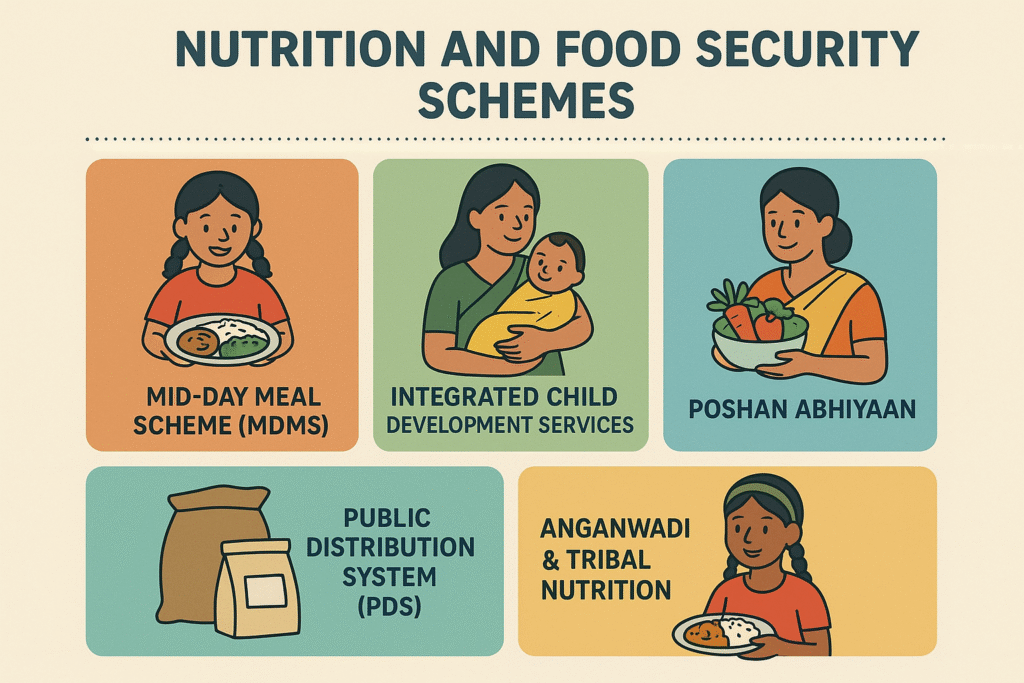
Mid-Day Meal Scheme (MDMS)
- Add soy flour (10–20%) to wheat/rice-based meals.
- Use soy nuggets in sabzi or khichdi once a week.
- Result: Higher protein + improved growth in children.
Integrated Child Development Services (ICDS)
- Distribute soy-based fortified mixes to pregnant women & toddlers.
- Ready-to-cook soy upma, soy porridge for rural areas.
Poshan Abhiyaan
- Promote soy cooperatives for local nutrition entrepreneurship.
- Encourage SHGs (Self-Help Groups) to make soy laddoos, bars, or snacks.
Public Distribution System (PDS)
- Blend 10–15% soy flour with wheat or rice for affordable fortification.
Anganwadi & Tribal Nutrition
- Soy can tackle tribal child malnutrition — rich in iron, protein, zinc.
- Low-cost and easily integrated into khichdi and suji porridge.
Practical Tips for Indian Homes
Even outside government schemes, every family can use soy smartly.
Breakfast
- Soy milk with oats or banana.
- Soy flour cheela with coriander chutney.
Lunch
- Mix soy granules into dal or sabzi.
- Soy pulao once a week for whole family.
Dinner
- Tofu bhurji or soy soup.
- Add soy flour into chapati dough.
Snacks
- Roasted soy nuts instead of chips.
- Soy protein bar or smoothie for students & gym-goers.
7-Day Soy Power Plan
| Day | Focus | Example |
| 1 | Add soy flour to chapati | 1 tbsp = +4g protein |
| 2 | Replace paneer with tofu | Lower fat, same taste |
| 3 | Try soy milk at breakfast | Boost calcium |
| 4 | Make soy khichdi | Great for kids |
| 5 | Snack on roasted soy | Fiber-rich |
| 6 | Try soy pulao for lunch | High satiety |
| 7 | Read soy product labels | Choose organic |
When Not to Overdo It
- People with thyroid issues: Limit to 2–3 servings per week.
- Avoid raw soybeans always cook or soak.
- Children under 2 years: consult Doctor before soy milk.
When Not to Overdo It
- People with thyroid issues: Limit to 2–3 servings per week.
- Avoid raw soybeans always cook or soak.
- Children under 2 years: consult Doctor before soy milk.
- Choose organic soy products.
Conclusion
India doesn’t need imported protein powders to solve its nutrition crisis it needs smarter use of what we already grow.
Soya is India’s best chance to close the protein gap, improve women’s health, and empower farmers all at once.
With the right inclusion in public schemes and awareness at home, soy can become the backbone of India’s nutritional independence.
You don’t need fancy diets. You need smart food, rooted in science and tradition.
Start today adding soy to your next meal and be part of India’s nutrition revolution.